

The Most Overlooked Volleyball Skill: Why Footwork Wins More Points Than Power
Discover why great footwork is one of the most important volleyball skills and learn practical drills to move faster, improve consistency, and win more points.
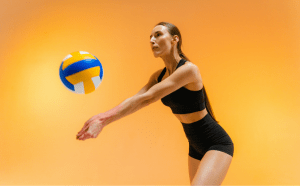
This article is in sync with our mission to contribute to the development of health culture and the growth of all disciplines of volleyball. We provide informative and educational content about volleyball training and the benefits of playing the sport.
- Why Footwork Is More Important Than Most Players Realize
- Power Starts From the Ground
- Good Footwork Improves Every Volleyball Skill
- Common Footwork Mistakes Beginners Make
- Move Before the Ball Arrives
- Stay Low and Ready
- Small Steps Beat Big Steps
- Simple Footwork Drills You Can Practice
- Footwork Is Also a Mental Skill
- How Coaches Can Improve Team Footwork
- Why Great Footwork Builds Confidence
- Conclusion: Strong Feet Create Strong Volleyball Players
Why Footwork Is More Important Than Most Players Realize
Volleyball is a game of positioning.
Almost every skill becomes easier when your body arrives in the right place at the right time. A perfect platform for passing, balanced shoulders for setting, or a well-timed approach for attacking all begin with your feet.
Poor footwork forces players to reach, lean, jump awkwardly, or hit off balance. Even technically skilled athletes struggle when they are constantly chasing the ball instead of moving early.
Good footwork allows players to stay balanced, react faster, and make cleaner contact with the ball.
Power Starts From the Ground
Many beginners believe stronger arms create stronger attacks.
In reality, powerful volleyball movements begin with the lower body.
Your feet create balance, generate momentum, and position your body for explosive movement. Without proper footwork, even very athletic players lose power because they cannot transfer energy efficiently.
This is why elite attackers spend so much time perfecting their approach—not just their swing.
Good Footwork Improves Every Volleyball Skill
Passing Becomes More Consistent
Instead of reaching with your arms, strong footwork helps you move behind the ball.
When your feet arrive first, your platform stays stable, making passes much more accurate.
Setting Feels Easier
Setters rarely receive perfect passes.
Their ability to move quickly under the ball allows them to deliver consistent sets from difficult positions.
Great setters often look effortless because their feet do the hard work before their hands ever touch the ball.
Attacking Becomes More Powerful
A controlled approach creates better timing, higher jumps, and stronger attacks.
Many hitting errors happen because players rush their approach or arrive too close—or too far—from the ball.
Good footwork solves these problems before contact even happens.
Defense Improves Dramatically
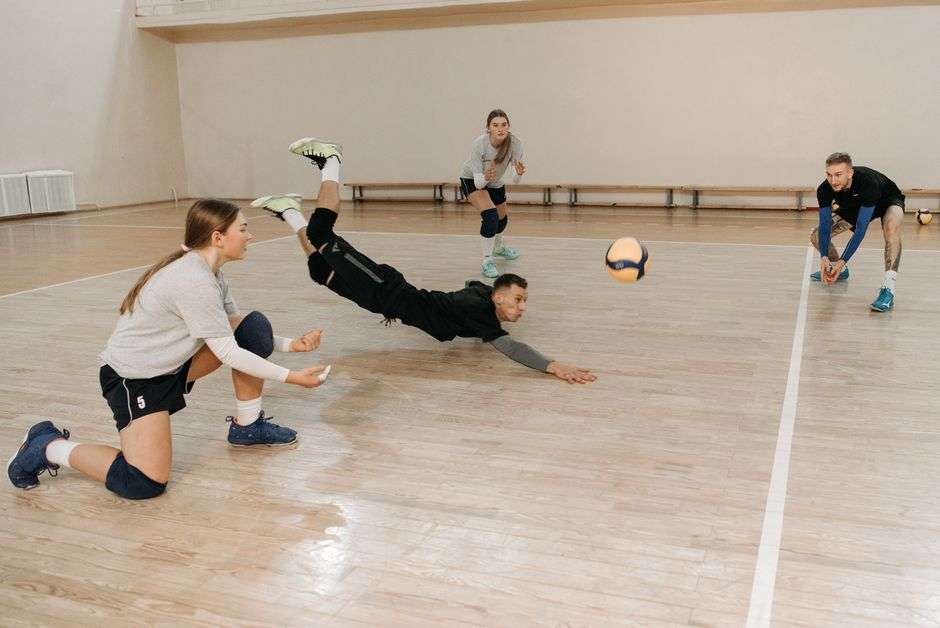
Digging hard-driven attacks is rarely about fast hands.
It is usually about reading the play early and getting your feet into the correct position.
Players who move efficiently can defend balls that slower players never reach.
Common Footwork Mistakes Beginners Make
Most new players focus almost entirely on the ball and forget about body movement.
Some of the most common mistakes include:
Standing flat-footed before the serve
Crossing the feet while moving sideways
Waiting until the ball is already close before reacting
Taking large, slow steps instead of quick adjustment steps
Stopping their feet before contacting the ball
These habits make volleyball much harder than it needs to be.
Move Before the Ball Arrives
One of the biggest differences between beginner and experienced players is timing.
Beginners often wait to see exactly where the ball is going before moving.
Experienced players start reading the play earlier. They react to the server, hitter, or setter and begin adjusting before the ball crosses the net.
This gives them more time to get balanced and make controlled plays.
Early movement is usually more valuable than faster movement.
Stay Low and Ready
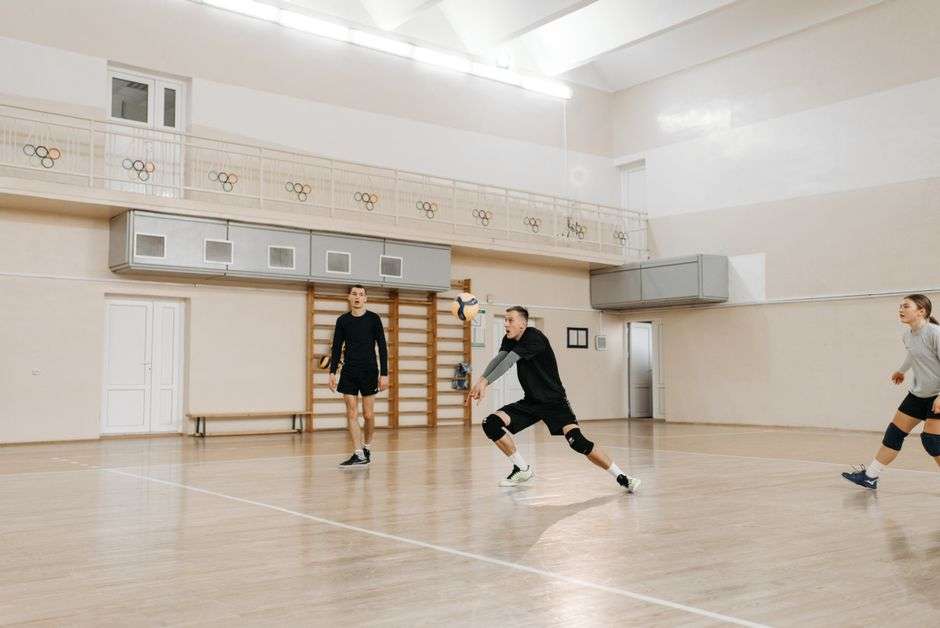
Good volleyball footwork starts with an athletic ready position.
Players should avoid standing upright with locked knees.
Instead:
Bend your knees slightly.
Stay on the balls of your feet.
Keep your weight balanced.
Be ready to move in any direction.
This athletic posture allows quicker reactions and smoother movement during rallies.
Small Steps Beat Big Steps
Many beginners try to cover the court with long strides.
While this feels faster, it often makes players lose balance.
Elite volleyball players constantly use quick adjustment steps.
These small movements help them fine-tune their position before every contact.
Instead of making one huge step toward the ball, think about taking several controlled steps that keep your body balanced.
Simple Footwork Drills You Can Practice
Shadow Movement
Practice volleyball movements without a ball.
Move into passing position, transition to attack, shuffle defensively, and return to ready position.
This develops muscle memory without the distraction of ball contact.
Agility Ladder Drills
An agility ladder helps improve:
Quick feet
Coordination
Balance
Reaction speed
Even five to ten minutes of ladder work can improve movement efficiency over time.
Cone Shuffle Drill
Place three cones several feet apart.
Shuffle quickly between them while staying low and maintaining proper volleyball posture.
Focus on smooth movement instead of maximum speed.
Partner Reaction Drill
Have a teammate point randomly left, right, forward, or backward.
React immediately using quick shuffle steps while staying balanced.
This improves reaction time and court awareness.

Footwork Is Also a Mental Skill
Good movement starts before your feet actually move.
Players who read the game well react earlier because they recognize patterns.
Watch the server’s body position.
Observe the setter’s shoulders.
Pay attention to the hitter’s approach.
The earlier you recognize what is happening, the easier your footwork becomes.
How Coaches Can Improve Team Footwork
Many coaches spend most practice time on ball skills while treating footwork as secondary.
But movement should be part of nearly every drill.
Coaches can improve team footwork by:
Rewarding good positioning instead of only successful contacts.
Including movement before every passing and hitting drill.
Using game-like situations that require players to react instead of memorizing patterns.
Giving feedback on balance and body position, not just ball control.
When movement improves, technical skills often improve naturally.
Why Great Footwork Builds Confidence
Players who move well usually feel calmer during matches.
Instead of rushing toward every ball, they trust their ability to arrive in good position.
This confidence reduces panic, improves decision-making, and allows athletes to focus on the game rather than simply chasing the next play.
Better movement also means fewer desperate reaches and fewer unforced errors, which naturally builds confidence over time.
Conclusion: Strong Feet Create Strong Volleyball Players
Power may grab attention, but footwork wins points consistently.
The players who seem effortless on the court are rarely standing still. They are constantly reading the game, adjusting their position, and creating balanced body positions before every touch.
Whether you are learning to pass, set, attack, or defend, better footwork will improve every part of your game.
Instead of always trying to jump higher or hit harder, spend time developing your movement.
You may discover that the most overlooked skill in volleyball is also one of the fastest ways to become a more confident, reliable, and complete player.
Disclaimer
Disclaimer: The information provided in this article is for general informational and educational purposes only. It is intended to offer basic guidance about volleyball rules, techniques, and lifestyle topics and may not apply to every individual or situation.
While we aim to provide accurate and helpful content, Ovanto.org and its contributors make no guarantees regarding results or outcomes. Any actions taken based on this information are at your own discretion. For more personalized advice or instruction, consider consulting a qualified coach, trainer, or professional.
Always consider your personal health condition, physical abilities, and any limitations you may have before starting a new training program. Individual results and experiences may vary.
