

How to Fix the Most Common Volleyball Serve Mistakes
Small corrections that lead to big improvements on the court.
By Ovanto.org Team

This article is in sync with our mission to contribute to the development of health culture and the growth of all disciplines of volleyball. We provide informative and educational content about volleyball training and the benefits of playing the sport.
Introduction: Serving Shouldn’t Be Stressful
Serving is one of the most misunderstood skills in volleyball.
From the outside, it looks simple — toss the ball, swing your arm, and send it over the net. But every player knows the truth: serving is a mental AND technical challenge.
Because it’s the only action in volleyball that starts entirely in your hands (no teammates, no opponents), it exposes every weakness — shaky confidence, poor timing, bad footwork, or an inconsistent toss.
The good news?
Most serving problems come from a small number of common mistakes, and fixing these creates instant improvement.
By understanding what’s going wrong — and how to correct it — you can turn your serve from a frustration into a strength.
Let’s break down the biggest serving mistakes and how to fix each one.

1. Mistake: A Bad Toss — The #1 Serve Killer
Almost every serving problem starts with a bad toss.
If your toss lands behind you, too high, too far forward, or left/right… your serve is already lost before your hand even touches the ball.
How to Fix It:
Hold the ball with your hand relaxed, palm up.
Release with your fingertips, not your wrist.
Keep the toss low, controlled, and slow.
Aim to toss directly above your hitting shoulder — not in front of your face, not behind your head.
Your tossing arm should finish high, not dropping immediately.
A stable toss = a stable serve.
Practice tossing 20–30 times without hitting. Only when your toss is consistent should you add the swing.
👉 Mini Drill:
Toss the ball and catch it at the highest point using the same hand.
If you can’t catch it comfortably, your toss is drifting.

2. Mistake: Serving Only With Your Arm
Beginners often swing only with the arm while the rest of the body stays stiff.
This leads to weak, floaty serves that barely clear the net.
How to Fix It:
Think of a serve like throwing a baseball:
power starts from your legs and core.
Step forward with your non-hitting foot.
Slightly rotate your hips toward the target.
Engage your core as you swing.
Let your shoulder and arm follow naturally.
When your body moves as one unit, your serve becomes smoother, stronger, and more accurate.
3. Mistake: Low Contact Point
If you hit the ball too low — near the face or chest — it will either go straight into the net or lose all its power.
How to Fix It:
Keep your hitting arm fully extended.
Contact the ball as high as you can reach.
Strike the middle of the ball, not the bottom.
Keep your hand firm, fingers tight, wrist solid.
Imagine you’re “pressing the ball down into the court,” not lifting it up.

4. Mistake: No Target = No Accuracy
Many players simply serve “over the net” without picking a spot.
This creates a serve that’s inconsistent and easy to receive.
How to Fix It:
Before serving, choose a target:
Deep corner
Sideline
Weak passer
Seam between two players
Your brain follows your eyes — so always know where you want the ball to go.
👉 Quick Routine:
Look at the target.
Take a breath.
Toss.
Hit confidently.

5. Mistake: Falling Forward or Sideways
Losing balance after contact means your technique isn’t stable.
This affects your accuracy and your power.
How to Fix It:
Stand with your feet shoulder-width apart.
Keep weight evenly distributed.
Only step forward after hitting the ball.
Your follow-through should end balanced, not falling forward.
A controlled end position means you had a controlled swing.
6. Mistake: Rushing the Serve
Young players often hurry the serve, trying to get it over quickly instead of building the right rhythm.
How to Fix It:
Slow down.
Serving is a sequence — not a race.
A great serve uses:
Breathing
A calm toss
Controlled swing
Balanced finish
You don’t need to hit hard to serve well.
In fact, controlled serves win more points than powerful, inconsistent ones.

7. Mistake: Overthinking (The Silent Enemy)
Serving anxiety is incredibly common.
Players fear missing, fear disappointing teammates, or fear being subbed out.
This tension changes your mechanics — especially your toss.
How to Fix It:
Develop a consistent pre-serve routine.
Keep your shoulders relaxed.
Focus on one technical point only (not five at once).
Breathe slowly and deeply before your toss.
Trust your training — don’t try to change everything mid-serve.
Confidence grows from repetition.
The more your serve becomes a routine, the less pressure can affect it.

8. Mistake: Not Practicing the Serve Enough
Many players avoid serving practice because it feels repetitive or frustrating.
But serving is one of the skills that improves the fastest with consistent reps.
How to Fix It:
Practice your serve in short, focused sessions:
5 minutes of toss-only
10 minutes of accuracy drills
10 minutes focusing on arm swing
10 minutes of full serves
Technique + repetition = mastery.
👉 Quick Daily Drill:
Serve 10 balls and record how many go in.
Try to increase the number each day.

Conclusion: A Better Serve Starts With the Basics
Every player — from beginners to professionals — struggles with serving at some point.
The secret isn’t talent. It’s patience, consistency, and attention to the fundamentals.
If you fix the toss, improve your contact point, use your whole body, and serve with confidence, your entire game will transform.
A great serve doesn’t happen overnight, but with steady practice and the right technique, it becomes one of your biggest strength on the court.
Pro Tip to Improve Faster
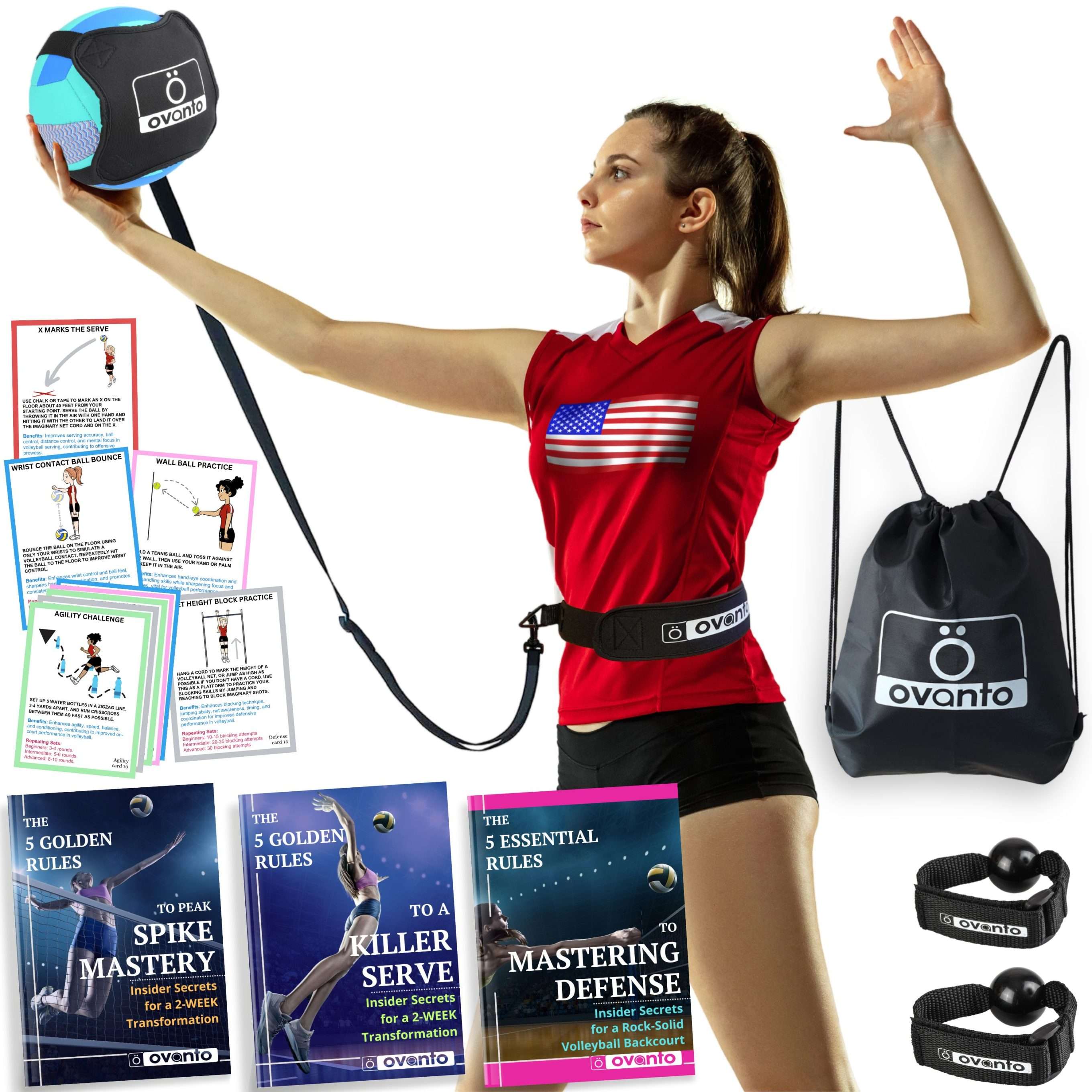
Using structured tools like our Volleyball Trainers and 48 Volleyball Training Cards helps players practice smarter, stay consistent, and improve their serving technique with clear, step-by-step drills.
Disclaimer:
The tips and techniques in this article are for general educational purposes. Every player has different physical conditions and experience levels. Always use good judgment, follow safety guidelines, and adjust drills to your own ability. Ovanto.org and its authors are not responsible for injuries or outcomes resulting from applying this information.
Practice safely and enjoy the game.
